AI Video Editing Prompts for Fashion Videos: Stylish, Sleek and Scroll-Stopping
Quick answer: The best ai video editing prompts for fashion videos name the outfit, the location, the walk or pose, and the mood in one polished instruction. A prompt like “a model in a flowing red dress walking through a city street at dusk, confident stride, soft neon light, sleek music, elegant and bold” gives the editor a complete visual brief. Pick one look, one setting, and one attitude, then let the edit highlight fabric, movement, and detail.
Why Fashion Footage Needs a Sleek, Deliberate Edit
Fashion video is judged in the first two seconds, often while a viewer is scrolling past dozens of other clips. A loose, unfocused edit will lose that viewer before the outfit has even been seen properly, while a sharp edit can make a simple outfit feel like a runway moment. The difference lies in intention: every cut, every colour choice, and every beat of music should serve the look being shown.
Unlike a party or a ceremony, a fashion film has no story to carry it, so the visuals must do all the work. Movement becomes the plot, with fabric swaying, a coat turning, or a heel striking the pavement in rhythm. A prompt that describes that movement clearly helps the editor choose the right speed, the right angle, and the right moment to linger on a detail.
Writing a Fashion Prompt That Sells the Look
Start with the garment itself, describing its colour, fabric, and silhouette in plain words that anyone could picture. Then place the model somewhere that suits the outfit, whether that is a bright studio, a quiet street, or a sunlit rooftop. Finally, name the attitude the model should project, because confidence, playfulness, and elegance each call for a very different pace and soundtrack.
Resist the urge to describe every accessory in the same sentence, since a crowded prompt produces a crowded edit. Choose the one or two details that make the look special, such as a statement coat or a pair of boots, and let the rest support them quietly. Review the first version, then adjust only the lighting or the tempo before changing anything else.
- Outfit: garment, colour, fabric, silhouette, and the detail that makes it stand out.
- Model: walk, pose, expression, and the attitude the look should project.
- Location: studio, street, rooftop, beach, gallery, or a softly lit interior.
- Light: crisp daylight, golden hour, neon evening, or clean studio lighting.
- Sound: sleek electronic music, soft jazz, bold beats, or silence with footsteps.
Prompts for Street Style and Everyday Looks
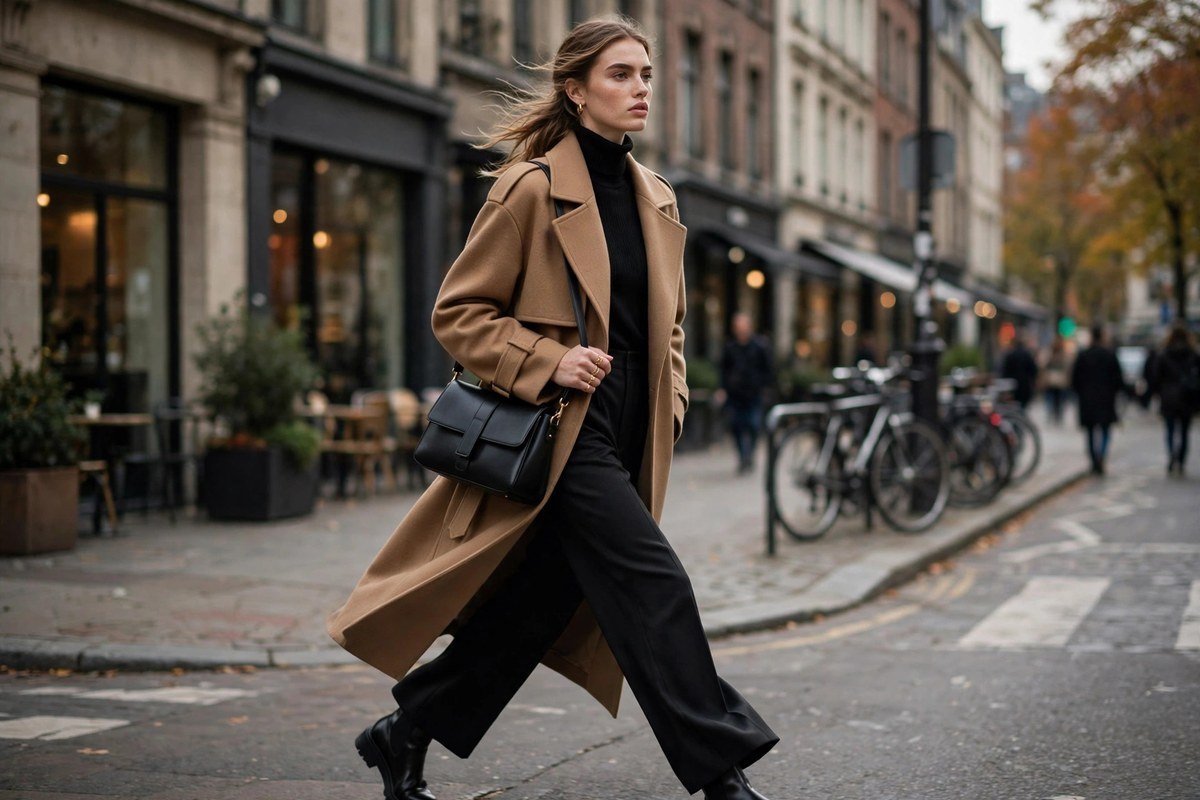
Street style films work best when they feel spontaneous, even when every shot has been planned. A model crossing a road, turning a corner, or pausing beside a mural gives the edit natural movement to follow, and the city itself becomes part of the outfit. Keep the colours true to life, let the background stay slightly soft, and use a steady, confident pace that matches a real walk.
- “A woman in a camel coat and white boots walking down a city street, confident stride, autumn leaves, soft daylight, sleek and elegant.”
- “A young man in a denim jacket and black jeans leaning against a painted wall, relaxed pose, bright afternoon sun, casual and cool, natural colours.”
- “A model in a flowing floral dress spinning slowly on a quiet street, skirt moving, golden hour light, joyful and graceful, warm cinematic tones.”
- “A street style look with a leather jacket, sunglasses, and boots, walking through a market, lively background, upbeat music, bold and confident.”
- “A woman in a linen suit sitting at a café table, coffee cup in hand, soft morning light, calm and chic, clean bright edit.”
- “A model in oversized knitwear walking through a park in winter, scarf flowing, soft overcast light, cosy and stylish, gentle pacing.”
- “A couple in matching neutral outfits strolling through a gallery district, laughing together, bright daylight, modern and elegant, smooth camera movement.”
Prompts for Runway, Editorial, and Studio Films
Runway and studio films suit a bolder treatment, with stronger contrast, sharper cuts, and music that drives the walk forward. The prompt should ask for clean lines and dramatic light, so the garment stands out against a simple background. In a studio, a plain backdrop and a single strong light can make even a quiet outfit feel powerful.
- “A runway model in a scarlet gown walking a bright catwalk, dramatic spotlights, audience in shadow, bold music, glamorous and powerful.”
- “A studio fashion film with a model in a black tailored suit, slow turn, crisp white background, sharp lighting, sleek and modern.”
- “An editorial shoot with a model in a silver dress against a dark backdrop, wind in hair, moody light, slow motion, striking and elegant.”
- “A model in a bright yellow coat posing in a minimalist studio, bold colour pop, clean framing, upbeat music, fresh and confident.”
- “A close fashion film showing fabric texture, stitching, and jewellery detail, soft studio light, gentle music, luxurious and refined.”
- “A runway finale with models walking together in a line, colourful outfits, bright lights, energetic music, celebratory and grand.”
- “A model in a vintage-inspired dress twirling in a sunlit studio, skirt flaring, warm light, nostalgic and graceful, soft film tones.”
Prompts for Lookbooks, Hauls, and Seasonal Collections
Lookbooks and hauls need clarity above all, because the viewer wants to see each outfit properly before the next one appears. Give every look a few seconds on screen, use a consistent transition between outfits, and keep the location or the lighting steady so the clothes, not the scenery, carry the change. A prompt for this format should name the number of looks and the order they appear in.
- “A spring lookbook with five outfits, garden setting, soft daylight, smooth transitions, fresh music, bright and cheerful, clean natural colours.”
- “A winter haul film with cosy knits, coats, and boots, warm interior light, relaxed pacing, gentle music, comfortable and stylish.”
- “A summer collection film on a beach at sunset, flowing dresses and linen shirts, golden light, breezy music, relaxed and beautiful.”
- “An autumn fashion film with layered outfits, city park setting, rich warm tones, calm music, elegant and thoughtful, cinematic and warm.”
- “A capsule wardrobe film showing ten outfits from a few pieces, bright studio, quick clean cuts, modern music, smart and inspiring.”
Colour, Rhythm, and Music for Fashion Edits
Colour grading can make or break a fashion film, because the outfit must look the way it does in real life. A red dress that turns orange or a white shirt that turns grey will confuse viewers and disappoint the person wearing the clothes. Ask for true, rich colours with a gentle lift in contrast, and check the result on a phone screen as well as a larger display.
Rhythm should follow the walk, with cuts landing on the beat and slow motion reserved for the moments when fabric moves best. Music should feel modern and confident without drowning out the natural sound of footsteps or a city street. For guidance on presenting products beautifully on camera, the product reels prompts on this site cover close-ups and detail shots, and the vlog prompts explain how to keep a personal, on-the-move film feeling natural and engaging.
Errors That Make Fashion Videos Feel Cheap
The most damaging mistake is rushing through outfits, so that no look stays on screen long enough to be appreciated. Fashion viewers need time to notice the cut, the colour, and the way the fabric moves, and a film that flashes through ten looks in twenty seconds teaches them nothing. Slow down, give each outfit its moment, and cut only when the viewer has had a chance to enjoy it.
Another common error is choosing a busy location that competes with the clothes, such as a crowded market or a wall covered in posters. A simple background lets the outfit lead, and a location should be chosen because it flatters the look, not because it is interesting on its own. Finally, avoid heavy filters that change the colour of the garments, because a filter that flatters a face can ruin a fabric, and accuracy matters more than atmosphere in fashion.
It is also worth filming a few extra detail shots after the main walk, such as a close view of shoes, a bag, or a piece of jewellery. Those short clips give the editor material for smooth transitions and for the final seconds of the film, when a single elegant detail can leave a stronger impression than another full outfit. Keep them steady, well lit, and consistent with the rest of the footage, so they blend into the edit without a jolt.
Frequently Asked Questions
What should a fashion video prompt include to look professional?
The best prompt names the outfit, the location, the walk or pose, and the mood in one polished sentence. Clear notes on light, music, and tempo help the editor produce a film that feels deliberate and stylish.
How long should a fashion video be?
Fifteen to sixty seconds suits most social platforms, with each outfit getting a few seconds on screen. A longer lookbook can run two minutes if every look earns its time.
What location works best for a fashion video?
A clean street, a bright studio, or a quiet rooftop all work well, because they keep attention on the outfit. Choose a place with good light and a simple background rather than a busy scene.
Should fashion videos use slow motion?
Slow motion works beautifully for flowing fabric, a coat turning, or a confident stride, but it should be used sparingly. A few slow moments inside a normally paced film feel special, while a whole film in slow motion feels heavy.
How do I keep outfit colours accurate in an edit?
Ask for true, natural colours with gentle contrast, and avoid strong filters that shift reds, whites, or blacks. Check the finished film on a phone screen before sharing it.
Final Thoughts
A fashion video succeeds when the viewer remembers the outfit and the feeling it created, not the effects that were used to show it. The prompts in this guide offer a starting point for street style, runway, and lookbook films, but the strongest edits will always come from choosing one look, one place, and one attitude, then letting the camera and the music serve them. Keep the colours honest, give each outfit time to shine, and finish on a single striking image that stays with the viewer after the video ends.