AI Photo Prompts for Architecture Photography: Clean Lines and Bold Buildings
Quick answer: AI photo prompts for architecture photography work best when they name the building’s shape, the angle of the shot, and the quality of the light. Keep the words clear and visual: “modern glass skyscraper photographed from below, sharp clean lines, deep blue sky, dramatic afternoon light”. One strong building, one clear angle, and bold light will give you an image that looks sharp, professional, and striking.
What Makes an Architecture Prompt Feel Bold
An architecture picture is about shape and scale, so the prompt should start with the building itself rather than the sky or the street around it. Lead with shape words such as towering, sweeping, and geometric, and the image maker reads the building’s character from them before anything else. A curved facade, a row of sharp balconies, or a single tall tower all read as bold at a glance. Put the structure at the front of the prompt, and the image that comes back tends to feel strong and confident.
The second thing a bold prompt needs is a clear point of view. A building seen from directly below looks mighty, while the same building seen from across a square looks calm and orderly. Name the angle in your prompt, such as “photographed from street level looking up” or “seen from a rooftop across the road”, so the generator knows where the camera stands. A strong building with a clear angle is always more striking than a beautiful building photographed from nowhere in particular.
Prompts for Modern Glass Buildings
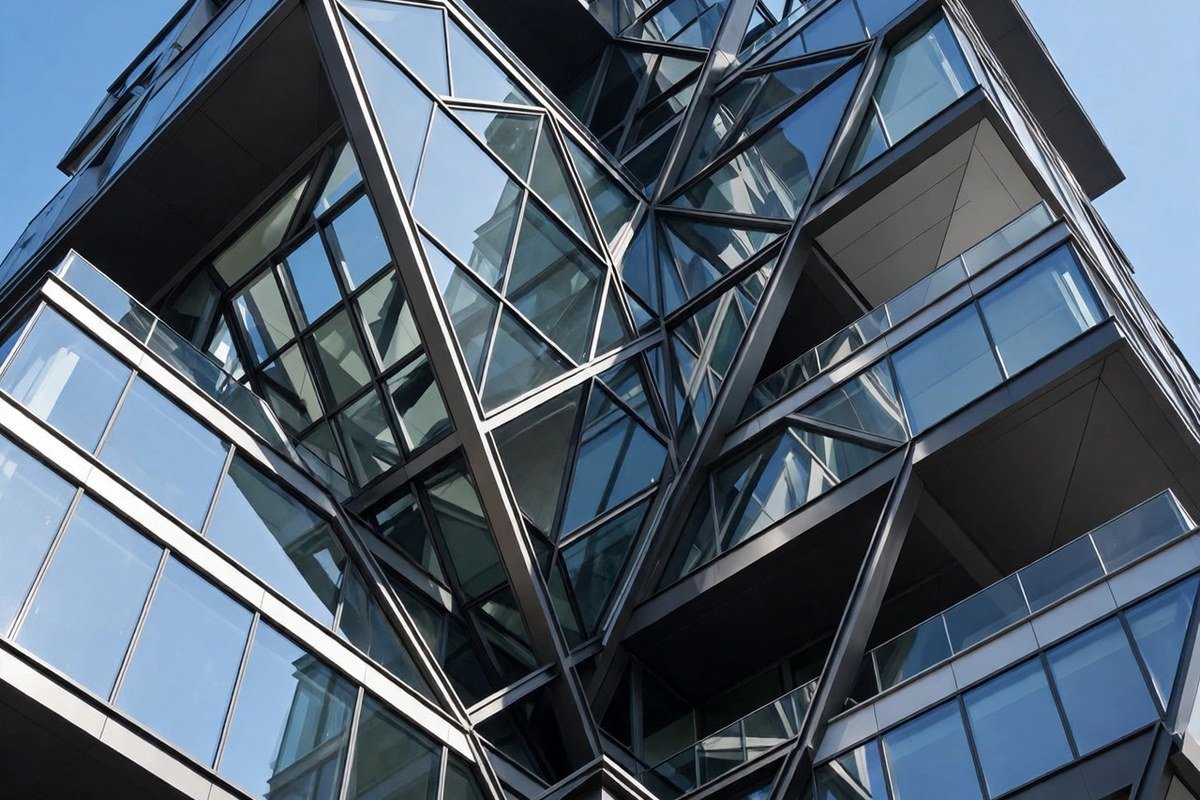
Modern glass buildings are some of the most rewarding subjects for architecture prompts, because their surfaces catch the sky and change colour through the day. A good glass prompt names the reflections directly: “tall glass office tower reflecting the blue sky and soft clouds, sharp steel edges, photographed from below, bright morning light”. The words reflecting and sharp matter here, because they tell the generator to keep the glass bright and the lines crisp instead of dull and flat.
Time of day changes a glass building completely, so name it in your prompt. Morning light makes the glass glow pale blue, afternoon light warms it to gold, and dusk turns the windows into a grid of tiny lights. Glass also mirrors the street below, so a wet pavement or a passing tram can double the colour in the lower half of the frame and make the whole picture richer. A prompt like “glass skyscraper at dusk, warm windows glowing against a deep blue sky, city lights below” gives the picture a mood that daylight cannot match. If you want more ideas for pictures in this kind of glow, the nature photography prompts on this site cover golden light, open skies, and dramatic outdoor scenes in more detail.
Prompts for Historic and Classic Buildings
Historic buildings carry a different kind of beauty, and the prompt should honour their age and craft. A prompt that describes carved stone, arched windows, or a weathered dome gives the generator real details to build around. Try a prompt like: “old stone cathedral with tall arched windows, carved wooden doors, soft morning light, quiet square in front, calm and timeless”. The details in the prompt are what make the building feel real instead of generic.
People can add life to a historic building picture without stealing the scene. A few visitors walking across the square, or a cyclist passing the facade, gives the picture a sense of scale and daily life. Describe them briefly and keep them small in the frame, so the building stays the clear subject. Avoid asking for a crowd, because a crowd pulls attention away from the stonework and the arches. One or two small figures is enough to show how grand the building truly is.
Prompts for Lines, Patterns and Details
Close-up detail pictures are a wonderful part of any architecture set, and patterns are usually the star. A good detail prompt describes the repetition as carefully as the material itself: “close-up of a building facade with repeating balconies, strong shadows between each level, warm afternoon light, sharp and geometric”. The words repeating and sharp tell the generator where the pattern should sit, while the shadows give the picture depth and rhythm.
Staircases, doorways, and window frames all make strong detail subjects, so describe them with care. A spiral staircase, a brass door handle, or a row of arched windows can each carry a whole picture on its own. A prompt like “spiral staircase seen from above, white steps curving down, soft light from a skylight, calm and elegant” gives the picture a quiet, graphic feeling. Keep the colours simple and the lines clean, because a detail picture works best when nothing competes with the pattern it is showing.
How to Describe Light, Colour and Mood for Architecture Pictures
Light is the most powerful tool in an architecture prompt, because it decides whether a building looks flat or full of depth. Low sun casts long shadows that show off texture and shape, while soft cloudy light suits pale stone and smooth concrete. Describe the light as “low afternoon sun casting long shadows across the facade” or “soft light on a cloudy morning”, and avoid asking for flat midday light, which can wash out the details that make a building interesting.
Colour should stay honest and restrained in architecture pictures. The natural colours of glass, steel, stone, and brick are usually enough, and naming them keeps the picture believable. Describe the materials in your prompt, such as “warm red brick”, “pale limestone”, or “dark steel and glass”, so the whole picture stays in one coherent palette. End with one feeling word if you like: bold, calm, dramatic, or timeless each push the picture toward a clear mood. The prompt works without one, but a well-chosen mood word tends to sharpen the whole image and make it feel composed on purpose.
Prompts for City Skylines and Streets
City skyline pictures bring many buildings together into one sweeping view, and the prompt should keep the composition clear. A skyline, a bridge, or a street canyon all work well when the light is strong. Try a prompt like: “city skyline at sunset, towers of glass and steel, warm orange sky, river reflecting the light in front, bold and dramatic”. The river or the road matters, because it gives the picture a foreground and keeps the composition from feeling empty.
Streets can add energy to an architecture prompt, as long as they stay tidy. A quiet street with one or two cars, a clean pavement, or a row of lamps can all frame a building beautifully without distracting from it. Ask for “a quiet street in the early morning” or “an empty plaza at dusk” rather than rush-hour traffic, because the mood should stay focused on the buildings. Let one feature carry the background, a tower, a bridge, or a single spire, so the building keeps the spotlight even when the city around it is busy.
- Clear angles: from below, from across the street, or from above for a strong point of view.
- Bold shapes: towers, curves, arches, and grids for a striking composition.
- Dramatic light: low sun and long shadows for depth and texture.
- Honest materials: glass, steel, stone, and brick for a believable picture.
- Strong mood words: bold, calm, dramatic, and timeless for confident images.
Common Architecture Prompt Mistakes to Avoid
The most common mistake in architecture prompts is describing too many buildings at once. A prompt that asks for a skyscraper, a cathedral, a bridge, and a market square all in one frame will produce a confused picture where no building stands out. Choose one building or one clear view, and let it fill the frame. A spare, focused prompt is what gives an architecture picture its power.
Another common slip is vague wording that gives the image maker nothing solid to work with. Words like nice, beautiful, or amazing sound pleasant, but they describe no shape, no material, and no light at all, so swap them for the building type, the material, and the angle. A last frequent miss is saying nothing about light. With no light cue the generator has to improvise, and improvised light often lands flat and dull. Spell out the light in every prompt, even with just the words “soft morning light”, and your architecture images will start looking sharper from the very next try.
Frequently Asked Questions
What is the best prompt for architecture photography?
Name the building, the angle, and the light in one clear sentence, such as “modern glass tower photographed from below, sharp lines, blue sky, bright morning light”. One strong building and a clear point of view beat a long list of details.
How do I make architecture photo prompts look professional?
Use precise words for shapes and materials, like glass, steel, curved, or geometric, and name the time of day for the light. A prompt that sounds like a real photographer’s plan will usually produce a picture that looks professional.
What angle works best for architecture pictures?
Photographing from below makes tall buildings look mighty, while a straight-on view suits facades and patterns. Name the angle in your prompt so the generator knows exactly where the camera stands.
Should I include people in architecture prompts?
Yes, one or two small figures can add scale and life to a building picture, especially in front of a large facade. Keep them small and brief in the prompt so the building stays the clear subject.
Can I use AI photo prompts for historic buildings?
Yes, historic buildings work well with AI prompts, as long as you name the details clearly, such as arched windows, carved stone, or a domed roof. Keep the setting quiet so the building’s age and craft stay the focus of the picture.
Final Thoughts
Architecture pictures are really about the way humans shape the world around them, and a good prompt honours that craft by describing one strong building in clear, honest words. Keep your angle deliberate, your light bold, and your focus on the structure, and your AI images will carry the confidence that makes these pictures so striking. Sketch one prompt tonight, pick another building or another hour tomorrow, and watch a few well-chosen words grow into an image worth framing.