

AI Photo Prompts for Nature Photography
Nature photography has one advantage no studio can buy: the world is already beautiful. The job of the prompt is to choose which part of that beauty to show, and when. A mountain at noon is a postcard. The same mountain at dawn, with mist in the valley and first light on the peak, is a picture people remember. AI photo prompts for nature photography help you pick the hour, the weather, and the framing that turn a pretty scene into a striking one.
This guide is organised by the places nature photographers actually go: mountains, forests, water, wildlife, and the small world of macro. Each section gives you prompts you can copy, and the reason each prompt works, so you can adapt it to the landscape near you. The light, the season, and the composition stay the same. Those three things are what make a nature prompt work, wherever you are.
Light First: Golden Hour, Blue Hour and Overcast Days
In nature photography, light matters more than the subject. A plain field in golden hour can outshine a famous peak at midday. Golden hour is the hour after sunrise and the hour before sunset, when the sun is low and the light turns warm and soft. A prompt that says rolling green hills at golden hour, long shadows, warm light on the grass, a single tree on the ridge, peaceful and cinematic, wide landscape shot will give you a calm, glowing picture with almost no effort.
Blue hour, the short time after the sun sets, is quieter and cooler. It suits lakes, city edges, and snowy scenes. A mountain lake at blue hour, deep blue sky, last pink light on the peaks, still water with a perfect reflection, calm and dreamy mood is a prompt that produces the kind of picture people use as a wallpaper. The reflection does half the work, so name it. Still water, mirror reflection, and glassy surface all tell the tool what you want.
Overcast days are underrated. Soft grey light removes harsh shadows and lets colours speak, especially greens. A forest path on an overcast morning, soft even light, mist between the trees, rich green moss, quiet and mysterious mood, shot down the centre of the path is a prompt that would look flat in bright sun and wonderful in cloud. Do not wait for sunshine to photograph nature. Some of the best nature pictures are made under a grey sky.
Mountain and Valley Prompts
Mountains need scale, and prompts should build it in. A lone hiker on a ridge gives a mountain its size. A small wooden cabin in a valley gives it warmth. Snow-capped peaks above a green valley, a tiny hiker with a red jacket on a ridge trail, morning light, crisp and majestic, wide shot with layers of mountains fading into the distance is a prompt that works because the red jacket gives the eye a starting point and the fading layers give it depth.
Valleys work best with leading lines: a river, a road, or a trail that pulls the eye from the front of the picture to the back. A river winding through a mountain valley, autumn trees in gold and orange along the banks, soft morning mist, a wooden bridge in the distance, warm and serene, wide landscape composition. The river is the line, the bridge is the destination, and the autumn colour is the reward. When you write a mountain prompt, name one foreground, one middle, and one background. Foreground rock, middle meadow, background peaks. That layering is what makes a flat picture feel deep.
Winter mountains need a different touch. Fresh snow softens every edge, and the light goes blue and clean. Snow-covered pine trees on a mountain slope, soft snowfall, pale blue light, a single set of footprints leading away, quiet and peaceful mood, minimal and elegant framing. The footprints are the detail that makes it a photograph rather than a blank white scene. Without a detail, snow pictures can feel empty. With one, they feel like a story.
Forest, Meadow and Flower Prompts
Forests are about light falling through leaves, and prompts should chase that. Sunbeams breaking through a dense green forest, dust and pollen glowing in the light, a narrow dirt path curving away, fresh and magical mood, shot from inside the trees looking out is a prompt that uses the forest itself as the frame. The path gives the picture direction, and the sunbeams give it wonder. Early morning is the best time for this, when the air is still damp and the light has something to catch.
Meadows suit a looser, freer feeling. A wildflower meadow in full bloom, purple, yellow, and white flowers stretching to the horizon, a few butterflies above the grass, soft afternoon light, joyful and fresh, low angle shot through the flowers. The low angle is the trick here. Shot from above, a meadow is a carpet. Shot from inside the flowers, it is a world. Name the angle in the prompt when it matters, because the tool will not guess it.
Flowers also reward close prompts. A single dewdrop on a red rose petal at dawn, soft background blur, fresh and delicate, macro photography style. A field of sunflowers turning toward the morning sun, warm light, a honeybee on the nearest bloom, cheerful and bright. Close flower prompts should name one flower, one detail, and one light. More than that, and the picture gets crowded. Less than that, and it gets vague.
Water, Coast and Sky
Water doubles a picture. A lake, a river, or a wet beach gives you the scene twice, once real and once reflected. A calm lake at sunrise, pink and orange sky, mountains mirrored in still water, a small wooden boat tied at the shore, peaceful and dreamy, wide shot. The boat anchors the picture, so the reflection does not float free. Moving water needs the opposite treatment. A waterfall crashing over dark rocks, white spray, long exposure silk effect, green moss on the stones, fresh and powerful mood. The words long exposure tell the tool to smooth the water into silk, which is the classic waterfall look.
The coast is about the edge between land and sea. Waves breaking on a rocky shore at sunset, spray in the air, warm light on wet stone, a lone lighthouse in the distance, dramatic and wild, shot from a low angle near the rocks. The low angle makes the waves look bigger, and the lighthouse gives the eye a place to rest. For a calmer coast, try a sandy beach at dawn, soft pastel sky, gentle waves, footprints curving along the wet sand, quiet and hopeful mood. Footprints and wet sand are small details, but they turn an empty beach into a walk someone just took.
Wildlife and Macro: Patience in a Prompt
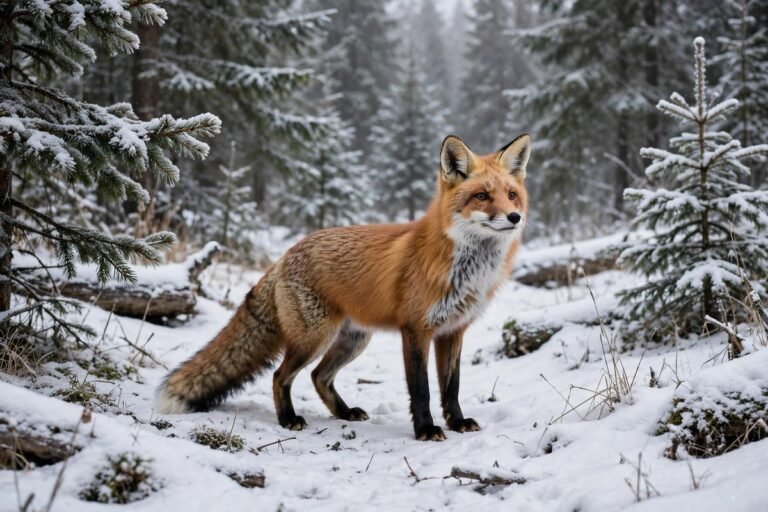
Wildlife prompts need two things: the animal, and the moment. A red fox in a snowy field, ears alert, breath visible in cold air, soft morning light, alert and wild, telephoto style with a blurred background. The blurred background is important. It is how wildlife photos isolate the animal, and naming it keeps the forest from swallowing the subject. A kingfisher diving toward a river, wings tucked, water droplets flying, bright daylight, frozen motion, sharp and thrilling. Frozen motion and sharp are the words that stop the dive turning into a blur.
Birds suit sky and branch prompts. An eagle soaring above a mountain valley, wings spread wide, dramatic clouds, golden light on feathers, powerful and free, shot from below. An owl perched on a bare branch at dusk, large eyes catching the last light, dark forest behind, mysterious and calm. For smaller creatures, go close. A honeybee covered in pollen on a purple lavender flower, soft morning light, shallow depth of field, fresh and detailed, macro style. A butterfly with orange wings resting on a green leaf, dewdrops around it, gentle light, delicate and still. Macro prompts work best with one creature, one plant, and one light.
Seasons, Weather and Composition
Seasons change a prompt completely with a single word. Spring means blossom, fresh green, and soft rain. Summer means long light, wildflowers, and bright skies. Autumn means gold, red, and mist. Winter means snow, bare branches, and blue light. A cherry blossom branch against a soft blue sky, petals drifting in the wind, gentle spring light, romantic and fresh. Name the season early in the prompt, so every other detail follows it.
Weather is a tool, not a problem. Fog simplifies a scene by hiding what does not matter. Rain adds shine to leaves and stone. Storm light, dark clouds with one break of sun, is the most dramatic light in nature photography. A lone tree on a hill under storm clouds, one beam of sunlight on the grass, moody and dramatic, wide shot. If you want mist, say where it sits: mist in the valley, mist between the trees, mist over the lake. Placed mist is a mood. Unplaced mist is just fog.
Composition is the last skill, and it is simple. Put the subject off-centre, about a third of the way across the frame. Use a path, a river, or a shoreline to lead the eye. Keep the horizon straight and give the sky or the land room to breathe. A mountain peak on the left third, a river leading from the bottom right, soft evening light, balanced and calm. Try one composition idea per prompt and compare the results.
Common Mistakes and a Simple Workflow
The most common mistake in nature prompts is asking for everything at once: mountains, lake, forest, waterfall, sunset, and wildlife in a single picture. Pick one subject and one mood. The second mistake is forgetting the time of day. A prompt with no light named will default to flat midday. Always name the hour. The third mistake is a busy foreground. A beautiful peak behind a cluttered campsite will always look like a campsite photo. Name a clean foreground, smooth rock, still water, open grass, and the subject will shine.
Work in small rounds. Make one prompt, look at the result, and change one thing: the hour, the season, the angle. Save the versions that work, with the season and light noted, so you can return to the same place in different weather and build a set. Start with the landscape nearest you, at the hour you love most, and write the prompt for that. The best nature pictures are not taken in faraway places. They are taken in familiar places, at the right moment, by someone who was looking.




2 Comments