
AI Photo Prompts for Candid Photography: Natural Moments, Real Feelings
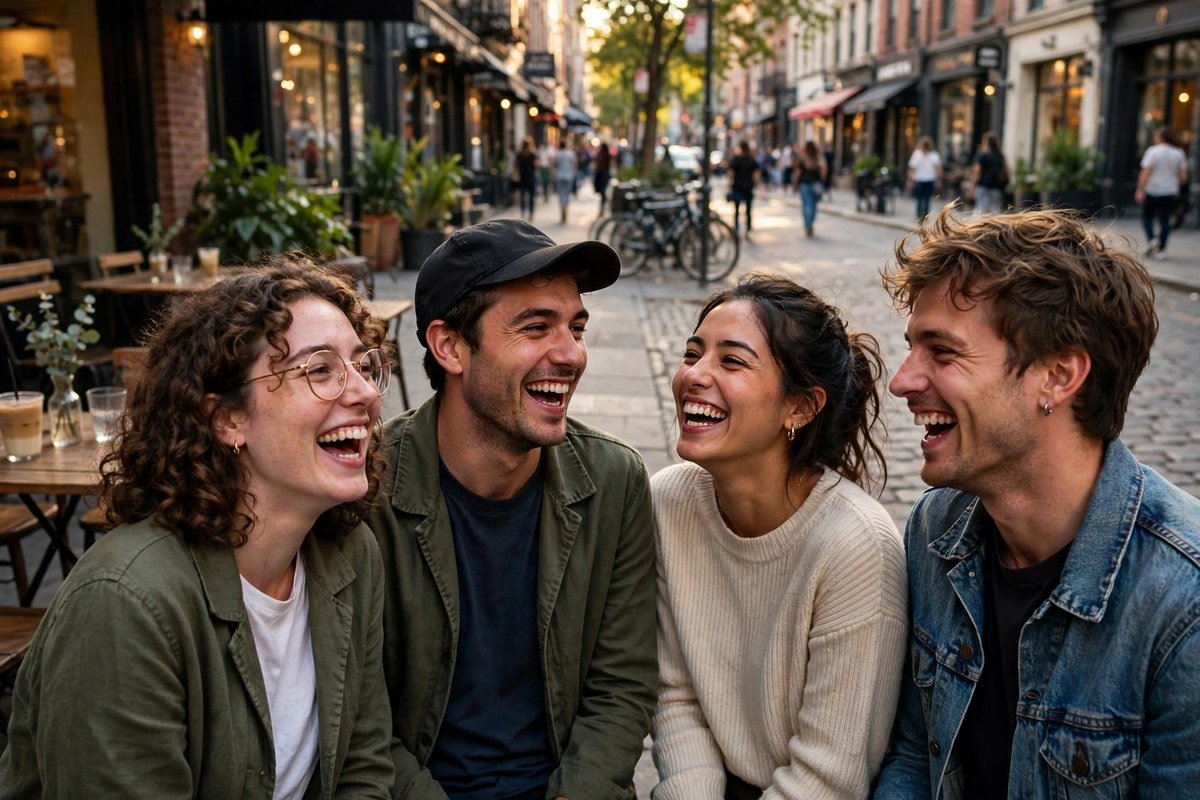
Quick answer: The strongest AI photo prompts for candid photography describe an unposed moment in plain language, naming who is there, what they are doing, where it happens, and how the light falls. A prompt such as “a grandmother laughing while kneading dough in a sunlit kitchen, flour on her hands, warm and unposed” gives the generator a scene to build instead of a pose to arrange. Leave room for imperfection, because a half-finished gesture or a glance away from the camera is what makes a candid picture feel honest.
What Makes a Photograph Feel Candid
A candid photograph catches people before they notice the camera. Nobody straightens a collar, nobody fixes a smile, and nobody holds a pose until their arms ache. The picture works because the moment was already happening, and the camera simply happened to be there. Artificial intelligence tools can recreate that feeling, but only when the prompt describes a living scene rather than a studio arrangement.
Posed portraits ask for symmetry, eye contact, and neat composition. Candid prompts ask for the opposite: a person mid-sentence, a child reaching for a toy, a friend laughing at a joke the viewer cannot hear. Those small, unfinished details signal to the eye that nothing was staged. When you write a prompt, picture the second before the photograph was taken, and describe that second.
Movement helps more than any other ingredient. A hand lifting a cup, a scarf catching wind, a dog shaking off rain, or a cyclist leaning into a turn all suggest that life continued after the shutter closed. Stillness can also work, but it must be a natural stillness, like someone gazing from a window or reading on a bench, not the frozen stillness of a person waiting for a flash.
Building a Candid Prompt That Reads True
A convincing candid prompt starts with a person doing something ordinary. Name the person in a few words, then give them a verb that belongs to daily life: stirring, walking, waiting, talking, fixing, carrying, or watching. Ordinary verbs keep the picture grounded, while dramatic verbs push it toward a film still. A woman stirring soup reads as candid; a woman leaping across rooftops does not, unless the story truly calls for it.
Next, place the person in a setting with signs of use. A kitchen with a chopping board and a kettle feels lived in. A street with a bicycle leaning on a wall feels real. A park bench with a dropped newspaper feels observed rather than arranged. One or two of those details are enough. A prompt crowded with props turns into a stage set, and the candid feeling disappears.
Light should match the place and the hour. Morning light through a kitchen window, grey light on a rainy street, or warm lamplight in a small cafe all tell the viewer when the moment happened. End with a single style cue, such as documentary, photojournalistic, or natural film look. Avoid words like glamorous or polished, because they pull the image back toward a pose.
- Person: age, clothing, and one visible trait, such as a grey beard or a red coat.
- Action: one everyday verb, such as laughing, pouring, walking, or listening.
- Setting: a lived-in place with one or two signs of daily use.
- Light: window light, overcast daylight, street lamps, or warm cafe light.
- Style: documentary, photojournalistic, or a natural film look.
Everyday Life Prompts at Home and Outdoors
Home is the easiest place to find candid moments, because people relax there. A parent reading to a child, a couple cooking together, or an elderly man watering plants on a balcony all make pictures that feel warm without trying. The key is to let the room stay slightly untidy. A mug left on a table or a book open on a sofa arm tells the viewer that someone lives here.
Outdoors, candid pictures come from walking, waiting, and watching. A commuter checking a train board, a vendor arranging fruit, or friends sharing chips on a park bench each carry a small story. Give the people space to move within the frame, and keep the background busy enough to feel like a real street, yet soft enough that faces stay clear.
- “A father reading a picture book to his daughter on a worn sofa, both laughing, soft lamp light, warm living room, documentary photograph.”
- “An elderly woman kneading dough in a sunlit kitchen, flour on her hands, flour sack and bowls nearby, candid and warm, natural light.”
- “Two friends sharing fries on a park bench, one mid-laugh, autumn leaves on the ground, overcast daylight, honest and relaxed.”
- “A street vendor arranging oranges at a market stall, morning light, customers blurred in the background, photojournalistic style.”
- “A girl chasing bubbles across a garden lawn, dress fluttering, golden evening light, joyful and unposed, candid photograph.”
Street and Travel Moments Without Staging
Street photography rewards patience, and candid prompts reward the same quality in words. Describe a place that is already moving: a crossing full of pedestrians, a harbour where fishermen mend nets, or a square where children chase pigeons. The people in the frame should belong to that place, doing what people there actually do.
Avoid naming famous landmarks as the centre of the picture. A landmark can sit in the background, soft and distant, while the real subject crosses the street or buys a newspaper. When the landmark dominates, the picture becomes a postcard. When a person dominates, it becomes a story.
Travel moments work best with a hint of the local rhythm. A traveller sipping tea at a roadside stall, or a couple reading a map on a train platform, suggests a journey without spelling it out. Keep clothing and gestures appropriate to the place and the weather.
For more portrait ideas in natural settings, the family picture prompts on this site show warm, relaxed groups, and the nature photography prompts cover outdoor light and landscape backdrops.
Emotion, Gesture and the Unposed Face
Faces carry candid photography. A real laugh crinkles the eyes, a real surprise opens the mouth slightly, and real concentration furrows the brow. Prompts that ask for those small, specific expressions produce far more believable pictures than prompts that simply say happy or sad. Name the cause of the feeling when you can: laughing at a joke, tearing up at a letter, or concentrating on a crossword.
Hands matter almost as much as faces. A hand steadying a cup, a hand reaching for another hand, or a hand wiping flour from a cheek adds a layer of truth that a face alone cannot carry. Include one hand gesture in the prompt when the scene allows it. The gesture anchors the body in the moment and stops the figure from looking like a cut-out.
Editing Candid Images Without Losing the Moment
Candid pictures should be edited lightly. Heavy smoothing, perfect skin, and flawless symmetry all work against the unposed feeling. Keep skin texture, keep a stray hair, and keep the slightly uneven light. The goal of editing here is to clarify the moment, not to rebuild it.
Start with a gentle crop that removes distractions at the edges, such as a stranger’s elbow or a bright sign that pulls the eye away. Then adjust exposure just enough to reveal detail in shadows without flattening the contrast. A small lift in warmth suits indoor scenes, while a slight cooling suits grey outdoor days. Presets Editor can apply a consistent documentary finish across a set, so a whole day of candid images shares one honest tone.
Black and white suits many candid pictures, because it removes colour distractions and lets gesture and expression lead. Try a monochrome version whenever the colours in the scene feel messy or the light feels flat. If the colour carries meaning, such as a red coat in a grey street, keep the colour and let that single hue do the work.
Common Mistakes That Make Candid Photos Look Staged
The biggest mistake is asking everyone to look at the camera. Eye contact with the lens turns a candid picture into a portrait in one word. Unless the scene truly involves someone noticing the camera, keep their gaze on the action, on another person, or on something out of frame. A glance away is the simplest signal that the moment was real.
A second mistake is overfilling the prompt with adjectives. Five adjectives for a smile and four for a coat leave the generator guessing which detail matters. One honest adjective per element is enough. A third mistake is choosing a setting that does not match the action. A person chopping vegetables on a beach, or reading a book in the middle of a motorway, reads as a joke rather than a candid scene. Keep the action and the place in agreement.
Another trap is perfect lighting everywhere. Real life has shadows, backlight, and uneven windows. A prompt that asks for soft, uneven window light will look more candid than one that asks for flawless studio light in a kitchen.
Frequently Asked Questions
What is candid photography?
Candid photography captures people in natural, unposed moments, such as laughing, working, or walking, without them looking at the camera. The picture feels honest because the moment was already happening.
Can AI create realistic candid photos?
Yes, AI can create realistic candid photos when the prompt describes an everyday action, a lived-in setting, and natural light. Imperfect details, like a glance away from the camera, make the result more believable.
How do I write a prompt for a candid street photo?
Name one person, give them an everyday action, place them on a real street, and add the light of the hour. Keep the landmark soft in the background and let the person carry the story.
Should people look at the camera in candid photos?
Usually not, because eye contact with the lens turns a candid picture into a portrait. Let the person look at the action, another person, or something beyond the frame.
Is black and white better for candid photography?
Black and white often suits candid pictures, because it removes colour distractions and lets expression and gesture lead. Keep colour when one hue, such as a red coat, carries the picture.
Final Thoughts
Candid photography is a habit of noticing, and candid prompts are the same habit written down. Watch how people actually move through a kitchen, a street, or a park, and put that movement into words. Name one person, one honest action, and one real place, then let the light fall where it falls. The pictures that last are rarely the most polished ones. They are the ones that catch a laugh halfway out, a hand reaching across a table, or a quiet look that nobody posed for.




One Comment