

AI Photo Prompts for Street Photography: Candid City Shots With Real Character
Quick answer: AI photo prompts for street photography work best when they describe real people doing ordinary things in a specific place, with honest light and a clear mood. A prompt like “old man selling fruit at a market stall, warm evening light, busy street behind him” feels alive, while “city street” feels empty. Name the people, the place, and the moment, and the picture will carry the character of a real street.
What Makes a Street Prompt Feel Real
Street photography is about life happening in front of the camera, so a good prompt must describe life, not just buildings. A street without people is a picture of architecture, not street photography. The best prompts name who is there and what they are doing: a woman carrying shopping bags, a child chasing pigeons, a cyclist waiting at a crossing, a vendor calling out to passers-by. These small human details are what make the picture feel candid instead of staged.
The second ingredient is a specific place. “A city street” could be anywhere, but “a narrow lane in an old town, laundry hanging above, a small cafe with chairs on the pavement” is a place with character. The generator can only build what your words describe, so give it walls, signs, shopfronts, and street furniture to work with. A worn brick wall, a striped awning, or a row of bicycles parked against a railing will do more for the picture than any fancy adjective.
Prompts for Busy Streets and Crowds
Busy streets are the heart of street photography, and they need movement in the words. Describe people walking in different directions, a bus passing in the background, or a crowd crossing at a traffic light. The prompt should feel like a moment caught in passing, not a scene arranged for the camera. Try something like: “crowded street market at noon, shoppers moving between stalls, colourful awnings overhead, steam rising from a food cart, lively and warm”. Every detail adds motion and sound to a silent picture.
Crowds also need a focal point, because a picture full of people with no centre feels confusing. Pick one person or one small group to stand out: a street musician with a guitar, a couple sharing an umbrella, or a child looking up at a shop window. The rest of the crowd becomes the background, and the picture gains a story. When you write the prompt, put the focal person first and the crowd second, so the generator knows what matters most.
Prompts for Quiet Corners and Solitary Figures
Not every street picture needs a crowd. Some of the strongest street photographs show a single person in a large, quiet space: a man reading on a bench, a woman waiting alone at a bus stop, or a worker sweeping an empty pavement at dawn. These pictures work because of the contrast between the person and the space around them. In your prompt, describe the emptiness as carefully as the person, so the generator leaves room for the mood to breathe.
Early morning and late evening are the best times for quiet street pictures, because the light is soft and the streets are half empty. A prompt like “empty cobbled street at dawn, one cyclist passing, soft golden light, long shadows, quiet and still” tells a complete story in a single sentence. Rain adds another layer: wet pavement, reflections in puddles, and umbrellas turn an ordinary street into a moody scene. If you want a lonely feeling, ask for rain and a single figure; if you want a hopeful feeling, ask for morning light breaking through the clouds.
How to Describe Light, Colour and Mood on the Street
Street light is different from landscape light, because it bounces off walls, windows, and signs. The most attractive street pictures use warm afternoon light, when the sun is low and the shadows are long. Describe it directly: “warm late-afternoon light falling between tall buildings, long shadows across the pavement”. Neon light and shop windows work beautifully after dark, so evening prompts can mention glowing signs, lit windows, and reflections on wet roads.
Colour is another tool that street prompts should use well. A city street is full of colour: painted doors, market fruit, posters on walls, and the clothes of the people passing by. Name two or three colours in your prompt, such as “red awnings, yellow taxis, blue shutters”, and the picture will feel richer at once. Mood words matter just as much. Words like lively, lonely, warm, chaotic, or nostalgic tell the generator how the street should feel, and they help the picture carry an emotion instead of just showing a place.
- Warm afternoon light: long shadows and golden tones that suit busy streets.
- Neon evening light: glowing signs and reflections that suit nightlife scenes.
- Rain and reflections: wet pavement and umbrellas for moody, cinematic streets.
- Bold colours: painted doors, market stalls, and shop signs for lively pictures.
- Soft morning light: quiet streets and slow moments before the city wakes.
Prompts for Markets, Cafes and Everyday Life
Markets and cafes are the easiest places to find real street character, because people there are busy with ordinary life. A market prompt should mention the goods: baskets of fruit, piles of spices, hanging clothes, or a fish stall with ice. Add the people buying and selling, and the picture fills itself. A good example is: “vegetable market in the morning, vendor weighing tomatoes, baskets of red chillies and green herbs, shoppers bargaining, warm sunlight through the awnings”.
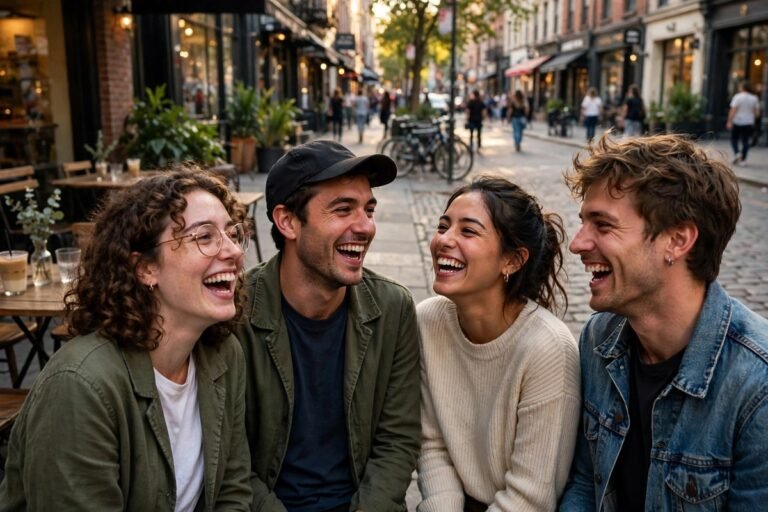
Cafe scenes work the same way. Describe who is sitting there and what they are doing: friends talking over coffee, an old man reading a newspaper, a waiter carrying a tray. Mention the chairs, the cups, and the street behind them. These prompts succeed because they describe a moment, not a place. The street behind the cafe gives the picture its setting, while the people at the table give it its heart. If you want more ideas for natural, unposed scenes, the candid photography prompts on this site explain how to capture honest moments in any setting.
Prompts for Night Streets and Neon Light
Night streets have a character that daylight can never give, and the prompt should lean into it. Neon signs, glowing shop windows, and headlights all become part of the picture, so name them directly. A prompt like “rainy city street at night, neon signs reflecting on wet pavement, a few people with umbrellas, warm and cool light mixing, cinematic and moody” gives the generator everything it needs. The reflections are especially important, because wet streets double the light and turn an ordinary road into something beautiful.
The people in a night street picture matter just as much as the lights. A lone figure walking under a glowing sign, friends laughing outside a restaurant, or a taxi driver waiting by his car all give the scene a human centre. Keep the crowd small at night, because a busy crowd in the dark can turn into a confusing blur of shapes. One or two people, clearly described, will hold the picture together while the lights do the rest. If the first result feels too dark, add “soft warm light from shop windows” to lift the shadows without losing the night mood. Night prompts also reward patience, so try the same scene with different words for the light and compare the results before settling on your favourite. A small change in the light can turn a good night picture into a great one.
Common Street Prompt Mistakes to Avoid
The biggest mistake in street prompts is writing about a place and forgetting the people. A prompt that lists buildings, roads, and signs but never mentions a person will produce a picture that feels empty and lifeless. Always include at least one person doing something, even if they are only walking past in the background. Street photography without people is just a picture of a street.
The second mistake is asking for too many things at once. A prompt that tries to include a market, a parade, a rainstorm, and a sunset will confuse the generator and produce a muddled picture. Pick one moment and describe it well. The third mistake is using only vague praise, such as “amazing street photo” or “beautiful city”, which tells the generator nothing to draw. Replace those words with real details: the colour of a door, the goods on a stall, the light on a wall. Real details make real pictures.
Frequently Asked Questions
What is the best prompt for a street photography scene?
Describe one person doing something ordinary in a specific place, with honest light and a clear mood. A prompt that names the people, the place, and the moment will always feel more real than a general description of a city.
How do I make street photo prompts look candid?
Use everyday actions like walking, shopping, talking, or waiting, and avoid words that suggest posing or looking at the camera. Candid pictures come from moments that seem to happen on their own.
Should I include people in every street prompt?
Yes, people are what make a street photograph feel alive. Even a single person in the background is enough to give the picture a human scale and a sense of real life.
What light works best for street photography prompts?
Warm late-afternoon light suits most street scenes, because it creates long shadows and rich colour. Evening neon light works well for nightlife, while soft morning light suits quiet, empty streets.
Can I use street prompts for small towns and villages?
Yes, street photography works anywhere people live and walk, not only in big cities. A village lane, a small market, or a quiet country road can make a wonderful street picture with the right details.
Final Thoughts
Street photography is really about paying attention: noticing the vendor arranging his fruit, the child laughing at a pigeon, or the old couple sharing a bench in the sun. A good prompt does the same thing with words, naming the people, the place, and the light so the picture feels like a real moment. Keep your prompts focused on one scene, put a person at the centre, and let the street around them tell the rest of the story. With a little practice, your AI street pictures will start to feel less like illustrations and more like memories of places you have actually walked.


One Comment