AI Photo Prompts for Travel Photography: Vivid, Wanderlust Shots
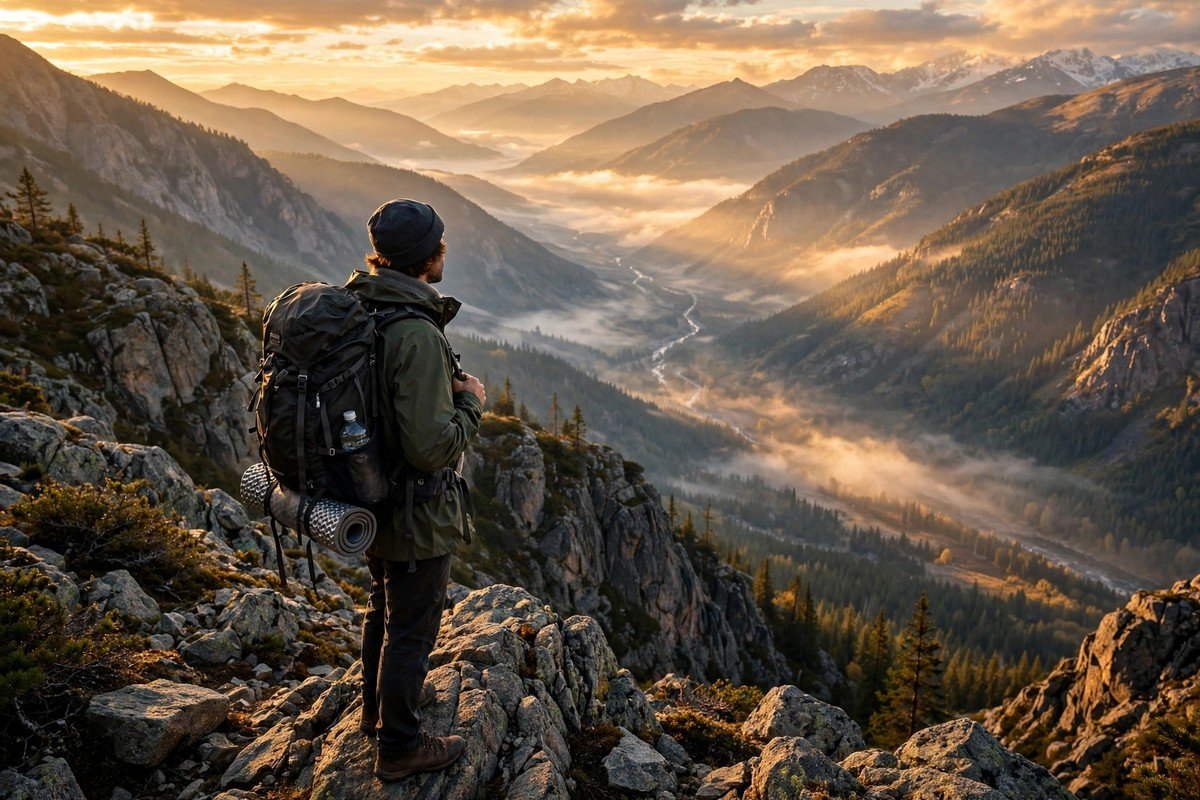
Quick answer: AI photo prompts for travel photography work best when they name one real place, one moment of the day, and one small human detail. Try: “traveller with a backpack on a mountain trail at sunrise, mist in the valley below, warm light on the peaks, a feeling of adventure”. A named place, honest light, and a human touch turn a generic scene into a picture that feels like a journey someone actually took.
Why a Travel Prompt Needs a Sense of Place
A travel picture only works when the viewer can tell where it was taken, and that sense of place has to come from the words in the prompt. A mountain pass in the Himalayas looks nothing like a coastal road in Portugal, yet a vague prompt will blend them into the same forgettable scene. Name the region, the terrain, and one landmark feature — a stone bridge, a red-tiled roof, a winding dirt track — and the image maker has something solid to build on. Place is not decoration in travel photography; it is the whole point of the picture.
The second ingredient is the feeling of being on the move. Travel photographs carry a restless energy that studio pictures never have, because someone walked, climbed, or waited for hours to reach that view. Let the prompt show that effort: a dusty boot on a trail edge, a map folded in a hand, a train window framing green hills. These small signs of movement tell the viewer that the scene was reached, not staged, and they make the picture feel honest. When place and motion sit together in one prompt, the result stops looking like a postcard and starts looking like a memory.
Prompts for Mountain Mornings and High Passes
Mountains reward early light, so most mountain travel prompts should be set at dawn or after it. The first sun on a ridge paints the peaks in amber while the valleys below still hold blue shadow, and that contrast is what makes a mountain picture dramatic. A prompt like “hiker with a backpack standing on a rocky ridge at sunrise, layers of mountain peaks fading into mist, warm light on the highest summit, quiet and vast” gives the generator a clear composition: one person, one ridge, and depth that stretches to the horizon.
Altitude also changes how a scene should be described, because the air is thinner, the light is sharper, and the colours are cleaner than at sea level. Add drifting cloud below the viewpoint to show how high the trail really climbs. A prompt such as “mountain trail winding through a high pass, prayer flags strung between rocks, snow on the distant peaks, a lone walker with a red backpack” carries both the landscape and the culture of the place. Keep the walker small in the frame, because scale is what makes mountains feel enormous.
Prompts for Busy Streets and Local Markets
Street scenes in travel photography are about people and clutter, the opposite of an empty mountain ridge. A market prompt should be full of specific things: baskets of spices, folded textiles, hanging lanterns, a vendor weighing fruit on an old brass scale. Each named object adds authenticity, and the generator will fill the gaps with colour and texture. Try a prompt like: “narrow market lane in an old town, stalls piled with oranges and spices, shoppers haggling, warm afternoon light between the rooftops, lively and real”. The detail does the work; the mood word at the end simply steers it.
When you write a street prompt, give the crowd a job to do rather than asking for a crowd alone. People buying bread, a barber cutting hair on a pavement, children chasing a ball down a lane — these actions make a street feel lived in instead of posed. One clear activity per prompt is enough, because two or three competing actions will tangle the scene. If you want more ideas for pictures full of people and movement, the street photography prompts on this site cover city life, candid moments, and busy corners in more detail.
Prompts for Coastlines, Islands and Slow Roads
Coastal travel pictures live or die on the quality of the water and the sky, so describe both with care. A turquoise lagoon, a grey Atlantic swell, or a calm fjord at dusk each needs different words, and the prompt should choose one rather than hedging between them. A good coastal prompt reads like this: “small fishing boat anchored in a turquoise bay, white houses on the cliff above, soft morning light, gentle waves, peaceful and far away”. The boat gives scale, the houses give place, and the light gives the mood.
Roads are the other great travel subject, because a road leading into the distance is a promise of somewhere else. Describe the road itself — a dusty track through olive groves, a coastal highway hugging the cliffs, a gravel lane between rice fields — and place one vehicle or walker on it to show the journey in progress. A prompt like “empty coastal road curving along a cliff at golden hour, a lone cyclist in the distance, sea spray on the rocks below” feels like the middle of a trip rather than the end of one. The road does the storytelling, so keep the rest of the scene quiet.
How to Weave People, Gear and Motion Into a Travel Prompt
People make travel pictures believable, but they should look like travellers, not models. A backpack, a worn pair of boots, a camera strap across the chest, or a scarf catching the wind all say more about a journey than a posed smile ever will. Describe the gear briefly and let the person’s posture do the rest: standing at a viewpoint, crouching to photograph a flower, or laughing with a local guide. The gear anchors the story, while the gesture keeps it human.
Prompts for Different Seasons and Weather on the Road
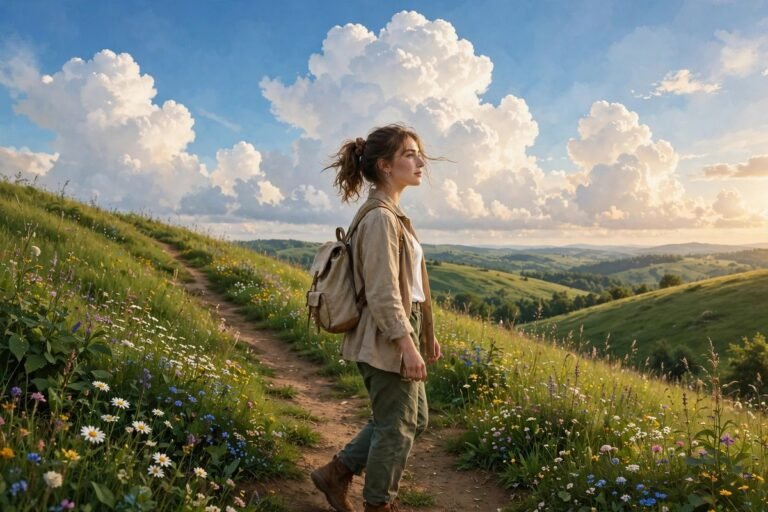
Seasons change a travel scene completely, and the prompt should name the season outright rather than leaving it to chance. Autumn turns a valley gold and red, winter covers a mountain town in snow, monsoon rain darkens the streets of a tropical city, and spring fills a hillside with wildflowers. A prompt such as “autumn valley with golden larch trees, a wooden cabin beside a stream, smoke from the chimney, crisp morning air” is unmistakably autumn, because every detail belongs to that season. Mixing seasons — snow and blossom in the same frame — is the fastest way to make a travel picture look wrong.
Weather adds atmosphere that sunshine alone cannot give. Fog softens a forest road, rain makes city lights reflect on wet stone, and a storm sky makes a coastline feel wild and dramatic. Try a prompt like: “old stone village in light rain, wet cobblestones reflecting warm window light, a traveller with an umbrella crossing the square, moody and quiet”. The rain is not a problem to hide; it is the reason the picture feels atmospheric. Name the weather plainly, and the image maker will use it instead of defaulting to a flat blue sky.
A Short Checklist Before You Generate a Travel Picture
- One named place: a valley, a market lane, a coastal road — never two places at once.
- One time of day: sunrise, golden hour, midday, or dusk, stated plainly.
- One traveller or detail: a backpack, a bicycle, a boat, or a person at a viewpoint.
- One season or weather: autumn mist, monsoon rain, or clear winter light.
- One mood word: peaceful, adventurous, lively, or far away, to set the feeling.
Travel Prompt Mistakes That Flatten the Picture
The most common mistake in travel prompts is listing famous landmarks like a checklist — the Eiffel Tower, a gondola, a cherry tree, and a desert, all in one sentence. The generator cannot honour four famous places at once, so the result is a confused collage that belongs nowhere. Pick one landmark or one landscape and let it own the frame. A single honest place will always look more real than a tour of the world crammed into one picture.
Another frequent slip is writing a prompt that reads like a travel brochure instead of a photograph. Words such as “breathtaking paradise” and “must-visit destination” describe a feeling about a place, not the place itself, and the image maker has nothing visual to work with. Replace praise with detail: say what the roofs are made of, what grows beside the road, or what colour the water is. A final mistake is forgetting the light entirely; a scene without a stated time of day defaults to flat midday sun, so always name the hour.
Frequently Asked Questions
What is the best AI photo prompt for travel photography?
Name one real place, one time of day, and one traveller, such as “traveller with a backpack on a mountain trail at sunrise, mist in the valley, warm light on the peaks”. Place, light, and a human detail together make the picture feel like a real journey.
How do I make AI travel photos look like real trips?
Add small signs of effort and imperfection: dusty boots, a folded map, laundry on a balcony, or rain on a window. These details make the scene feel lived in rather than staged or polished.
Should travel prompts include people?
Yes, one person usually helps, because a traveller gives the landscape scale and a story. Keep the person small in wide scenes and natural in close ones, so the place stays the star of the picture.
What time of day works best for travel photo prompts?
Sunrise and golden hour give the warmest, most flattering light for mountains, coasts, and streets alike. Midday light can work for markets and interiors, but it flattens wide landscapes, so use it sparingly.
Can I use AI photo prompts for travel pictures of my own trips?
Yes, you can recreate the feeling of a trip you took by describing the place, the weather, and what you were doing there. The result will be an inspired image rather than an exact copy of your own photo, so treat it as a fresh illustration of the memory.
Final Thoughts
Travel photography is about the moment a place stops being a name on a map and becomes a memory, and a good prompt chases that moment by naming one place, one hour, and one person on the road. Keep your scenes specific and your light honest, and your AI travel pictures will carry the pull that makes people pack a bag. Try one prompt tonight for a place you dream of visiting, then try the same place at a different hour tomorrow, and watch how a few changed words open up a new view.