
AI Photo Prompts for Landscape Photography: Stunning Scenes With the Right Words
Quick answer: AI photo prompts for landscape photography work best when they name the place, the light, the mood and the season in plain, specific words. A prompt that says “misty mountain lake at dawn, soft pink sky, calm water” gives the generator far more to work with than “nice mountains”. Keep your prompts short, describe one scene clearly, and add the feeling you want the picture to carry.
What Makes a Landscape Prompt Work
A landscape photograph is mostly light and space, so your prompt should describe those two things before anything else. The generator cannot see the view you have in mind, which means it depends entirely on the words you give it. When you write “green hills under a blue sky”, the result will be pleasant but plain. When you write “rolling green hills after rain, low sun breaking through clouds, a small stone cottage in the distance”, the picture gains depth, weather, and a story. The extra details do not need to be fancy; they only need to be clear.
The strongest landscape prompts follow a simple order: place, light, mood, and season. Start with the place, such as a mountain valley, a desert dune, or a rocky coastline. Then add the light, because the same valley looks completely different at dawn, at noon, and at dusk. Next, name the mood you want, whether that is peaceful, dramatic, wild, or quiet. Finally, mention the season if it matters, since snow, autumn leaves, or spring flowers change the whole scene. Working through these four ideas takes only a few seconds, and it turns a vague request into a picture worth keeping.
- Place: name the land itself, such as cliffs, a lake, a forest, or open fields.
- Light: say when it is, such as sunrise, golden hour, overcast morning, or starry night.
- Mood: choose a feeling, such as calm, dramatic, lonely, or fresh.
- Season: add the time of year when it changes the colours or the weather.
- Detail: include one small feature, such as a winding path, a lone tree, or drifting mist.
Prompts for Mountains and Valleys
Mountains are the most popular landscape subject, and they are also the easiest to describe badly. A prompt that only says “mountains” leaves the generator guessing about the height, the shape, and the atmosphere. Instead, describe the kind of mountain you mean: jagged snow-covered peaks, soft green ridges, or steep rocky slopes with a river running between them. Add the viewpoint too, because a scene seen from a valley floor feels very different from one seen from a high pass. A low viewpoint makes the peaks look huge and powerful, while a high viewpoint shows the shape of the whole range.
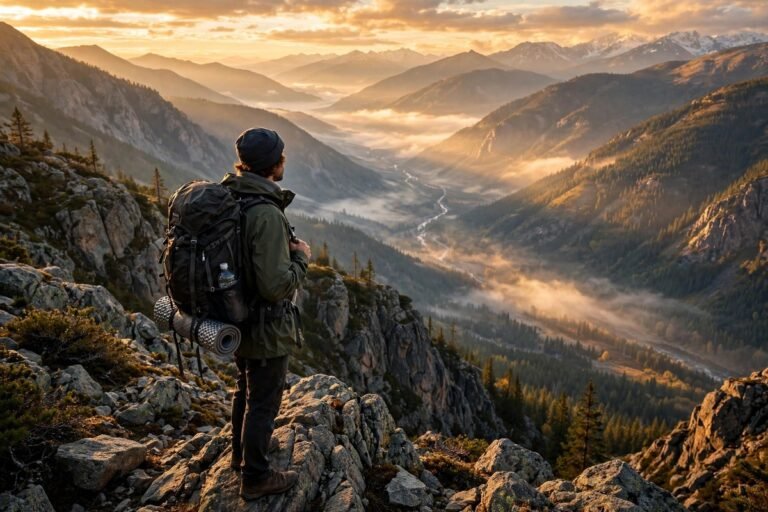
Valleys work best when the prompt gives the eye a path to follow. Mention a river winding through the valley, a road curving between the hills, or a line of trees leading toward the distance. These details create depth, which is what makes a landscape feel real rather than flat. A good example prompt is: “deep green valley at sunrise, a river winding between steep hills, thin mist in the air, warm light on the peaks, peaceful and quiet”. Each part of that sentence adds something the generator can use, and none of it is wasted.
Prompts for Coasts, Lakes and Rivers
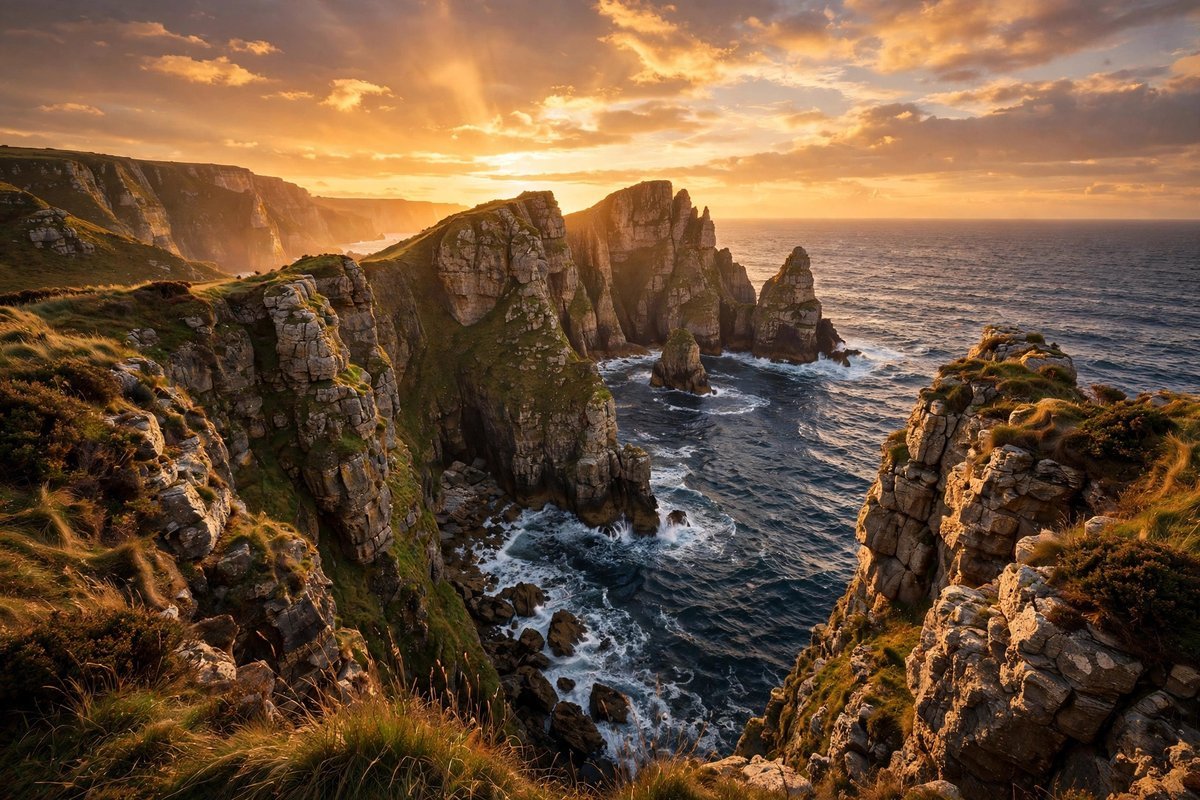
Water changes everything in a landscape picture, because it adds reflection, movement, and colour that land alone cannot give. When you write a prompt for a coastal scene, describe the sea itself: is it calm and glassy, or rough with white waves breaking on dark rocks? A calm sea at sunset gives a soft, dreamy picture, while a stormy coast gives a wild and dramatic one. Mention the beach or the cliffs as well, because the edge between land and water is often the most interesting part of the frame.
Lakes and rivers reward the same kind of care. A mountain lake is at its best when the prompt mentions the reflection, such as “still lake reflecting snow peaks, clear blue sky, a few clouds”. A river needs movement in the words, like “fast river flowing over smooth stones, green forest on both banks, soft morning light”. If you want a quieter picture, describe still water and a misty surface instead. The key is to say what the water is doing, because a generator will not guess whether you wanted calm or wild water unless you tell it.
Prompts for Forests, Deserts and Seasons
Forests are about layers: tall trees in front, soft light filtering through leaves, and a path or clearing that gives the picture a centre. A prompt like “tall pine forest in autumn, golden leaves on the ground, soft sunlight through the branches, a narrow path leading into the trees” gives the generator a clear scene to build. Fog and mist work wonderfully in forest prompts, because they soften the background and make the picture feel deep and quiet. Try adding “morning mist” or “light fog” to a forest prompt and watch how the mood changes.
Deserts need the opposite treatment. A desert picture lives on emptiness and shape, so describe the dunes, the shadows, and the sky. “Golden sand dunes at sunset, long shadows, a single camel track in the sand, clear orange sky” is a prompt that knows exactly what it wants. Seasons are just as powerful a tool: spring brings flowers and fresh green, summer brings bright light and deep blue skies, autumn brings warm colour, and winter brings snow and silence. When you name the season in your prompt, you are really choosing the colour palette of the whole picture. For more ideas on wild natural scenes, the nature photography prompts on this site cover flowers, wildlife, and quiet outdoor moments in the same clear style.
How to Describe Light, Weather and Mood
Light is the single most important word in any landscape prompt, because it decides the colours, the shadows, and the feeling of the picture. Golden hour light, the warm glow just after sunrise or just before sunset, suits almost every landscape and is the safest choice for a beginner. Blue hour, the cool light just after sunset, gives a calm and slightly mysterious picture. Harsh midday sun flattens a landscape, so it is usually better to ask for soft or overcast light when you want gentle colours and detail.
Weather is your second-best tool. A prompt that mentions rain, snow, fog, or a storm will always look more interesting than one that only mentions a clear sky. Clouds matter too: a sky with “soft clouds catching pink light” is far more attractive than an empty blue sky. Mood words tie it all together. Words like peaceful, dramatic, lonely, wild, fresh, and timeless tell the generator how the picture should feel, and they cost nothing to add. A landscape prompt without a mood word is like a story without a feeling, so always include one.
- Golden hour: warm, low light that suits valleys, coasts, and deserts.
- Blue hour: cool twilight light that suits lakes, cities, and quiet scenes.
- Overcast: soft, even light that suits forests, flowers, and gentle colours.
- Mist and fog: soften the background and add depth and mystery.
- Storm light: dark clouds with a break of sunlight for a dramatic picture.
Common Landscape Prompt Mistakes to Avoid
The most common mistake in landscape prompts is trying to fit too many scenes into one sentence. A prompt that asks for mountains, a beach, a forest, and a desert all at once will give you a confused picture with no clear subject. Pick one place and describe it well. If you want several different pictures, write several different prompts instead. Each prompt should describe a single scene that a photographer could actually stand in front of.
The second mistake is forgetting the sky. Beginners often describe the land in detail and leave the sky blank, which gives the generator nothing to work with above the horizon. A good landscape prompt always says something about the sky, even if it is only “clear blue sky” or “soft clouds at sunset”. The third mistake is using only adjectives and no nouns: “beautiful, amazing, stunning, gorgeous” tells the generator nothing about what to draw. Replace those words with real details, and the quality of your pictures will improve at once.
Finally, remember that a prompt is a starting point, not a finished picture. If the first result is not quite right, change one thing at a time: swap the time of day, add a little mist, or move the viewpoint lower. Small changes teach you how each word shapes the picture, and after a few tries you will know exactly which words give you the landscape you imagined.
Frequently Asked Questions
What is the best prompt for a mountain landscape photo?
Describe the peaks, the light, and the mood in one clear sentence, such as “snow-covered mountain peaks at sunrise, pink clouds, a calm lake below, peaceful and crisp”. Specific details always beat vague praise.
How do I make my landscape prompts look more realistic?
Use real places, real weather, and real light in your words, and avoid asking for impossible combinations. A prompt that sounds like a scene you could photograph will usually produce a picture that looks like a photograph.
Should I mention the season in a landscape prompt?
Yes, the season sets the colours and the weather of the whole picture, so name it whenever it matters. Spring, summer, autumn, and winter each give a landscape a completely different look.
How long should an AI photo prompt for landscape photography be?
One or two sentences is usually enough, as long as they cover the place, the light, and the mood. Longer prompts are fine too, but only if every extra word adds a real detail.
Can I use the same prompt for different landscape scenes?
You can reuse the structure, but change the place and the light for each scene. A prompt written for a beach will not work well for a forest, so swap the details while keeping the same clear pattern.
Final Thoughts
Good landscape prompts are really just good descriptions: a place you can picture, light you can feel, and a mood you can sense. Start with the four basics of place, light, mood, and season, add one small detail that makes the scene yours, and keep the prompt to one or two clear sentences. With that simple habit, your AI landscape pictures will stop looking generic and start looking like places you would love to visit. Try one prompt today, change a single word tomorrow, and notice how much difference a few careful words can make.




One Comment