
AI Video Editing Prompts for Cooking Videos: Make Every Recipe Look Delicious
Quick answer: The best AI video editing prompts for cooking videos describe the food in close-up: steam rising from a pan, a knife slicing through a tomato, cheese stretching as a slice is lifted, all in warm kitchen light. Add the dish, the key action, the camera angle, and the pace, and the edit will make the recipe look irresistible in under a minute. Show the food, not the cook, and let the sizzle carry the sound.
Why Cooking Videos Work When the Food Looks Real
A cooking video succeeds or fails in the first three seconds, when the viewer decides whether the food looks worth eating. A glossy, golden roast, a bright salad, or a pot of soup with steam curling up will hold anyone’s attention. A grey, flat, or blurry dish will not, no matter how good the recipe is. AI video editing prompts help you plan the shots that make food look real: the close-up, the pour, the sizzle, and the final plate.
The rule for cooking video is simple: the food is the star, and everything else is the stage. The kitchen should look clean, the light should be warm, and the hands should be the only part of the cook that appears. A face in the frame divides the viewer’s attention. Hands, food, and steam keep it exactly where it belongs.
How to Write a Cooking Video Prompt
A cooking video prompt needs five decisions. First, the dish: name it plainly, with one detail that makes it recognisable, such as a wood-fired pizza, a slow-cooked biryani, or a chocolate cake with a molten centre. Second, the key action: the chop, the pour, the flip, the stretch, or the slice that shows the food at its best. Third, the camera angle: overhead for assembly, close-up for texture, or a low side angle for height and steam. Fourth, the light: warm kitchen light, morning sun through a window, or soft evening lamps. Fifth, the length and pace: quick cuts for a reel, slow and calm for a full recipe.
Write the prompt as a list of shots, not a paragraph of adjectives. “Overhead shot, hands kneading dough on a wooden board, flour dust in the air, warm light” is a shot the editor can build. “A delicious and amazing pizza made with love” is not. Name what the camera sees, in the order it sees it, and the edit will follow.
- Dish: name it plainly, with one recognisable detail.
- Key action: the chop, pour, flip, stretch, or slice that shows it best.
- Camera angle: overhead for assembly, close-up for texture, side angle for height.
- Light: warm kitchen light or morning sun through a window.
- Length and pace: quick cuts for a reel, slow and calm for a full recipe.
Recipe Video Prompts for Everyday Dishes
Everyday dishes make the best cooking videos because viewers can actually cook them. A weeknight pasta, a breakfast pancake stack, or a simple salad will earn more saves than a dish nobody can afford to make. The prompts below focus on the moment that sells each dish: the sauce coming together, the pancake flipping, or the cheese melting.
- “Thirty-second reel: overhead shot, hands tossing pasta in a pan with cherry tomatoes and basil, steam rising, warm kitchen light, quick cuts, fresh and bright.”
- “Sixty-second recipe: close-up of hands whisking eggs in a bowl, pouring into a hot pan, soft scramble forming, butter melting, calm pace, warm and homely.”
- “Thirty-second reel: a pancake flipping in the air in slow motion, landing back in the pan, golden and crisp, berries and honey beside it, cheerful morning light.”
- “Sixty-second recipe: hands kneading dough on a wooden board, flour dust in the air, dough rising in a bowl, warm light, slow and satisfying.”
- “Thirty-second reel: a knife slicing through a ripe tomato, juice on the board, salt sprinkled over the slices, bright and fresh, sharp close-up.”
- “Sixty-second recipe: a pot of soup simmering, steam curling up, a ladle pouring it into a bowl, crusty bread beside it, cosy evening light, comforting.”
Baking and Dessert Video Prompts
Baking videos have a natural drama that other cooking videos lack: something goes into the oven plain and comes out transformed. The prompt should build the edit around that change. Show the batter, the rise, the golden crust, and the first slice, and the viewer will stay to see the ending. Slow motion suits baking well, especially the pour, the stretch, and the dusting of sugar at the end.
- “Sixty-second video: hands folding chocolate chips into cookie dough, scooping onto a tray, cookies rising in the oven, warm golden finish, cosy kitchen light.”
- “Thirty-second reel: a chocolate cake being sliced, the molten centre flowing out in slow motion, steam rising, dark and rich, indulgent.”
- “Sixty-second video: hands piping cream onto cupcakes, sprinkles falling in slow motion, bright and cheerful, soft daylight.”
- “Thirty-second reel: a loaf of bread coming out of the oven, steam rising as it is sliced, butter melting on a warm slice, golden and rustic.”
- “Sixty-second video: hands whisking cream into soft peaks, layering a trifle in a glass bowl, berries on top, elegant and light, bright kitchen.”
Street Food and Spicy Dish Prompts
Street food and spicy dishes suit a faster, louder edit than home cooking. The sizzle of a grill, the toss of a wok, the steam of a pot, and the crowd around a stall all carry energy, and the prompt should ask for it. Quick cuts, close-ups of the fire, and the sound of cooking suit these videos far better than a calm voiceover.
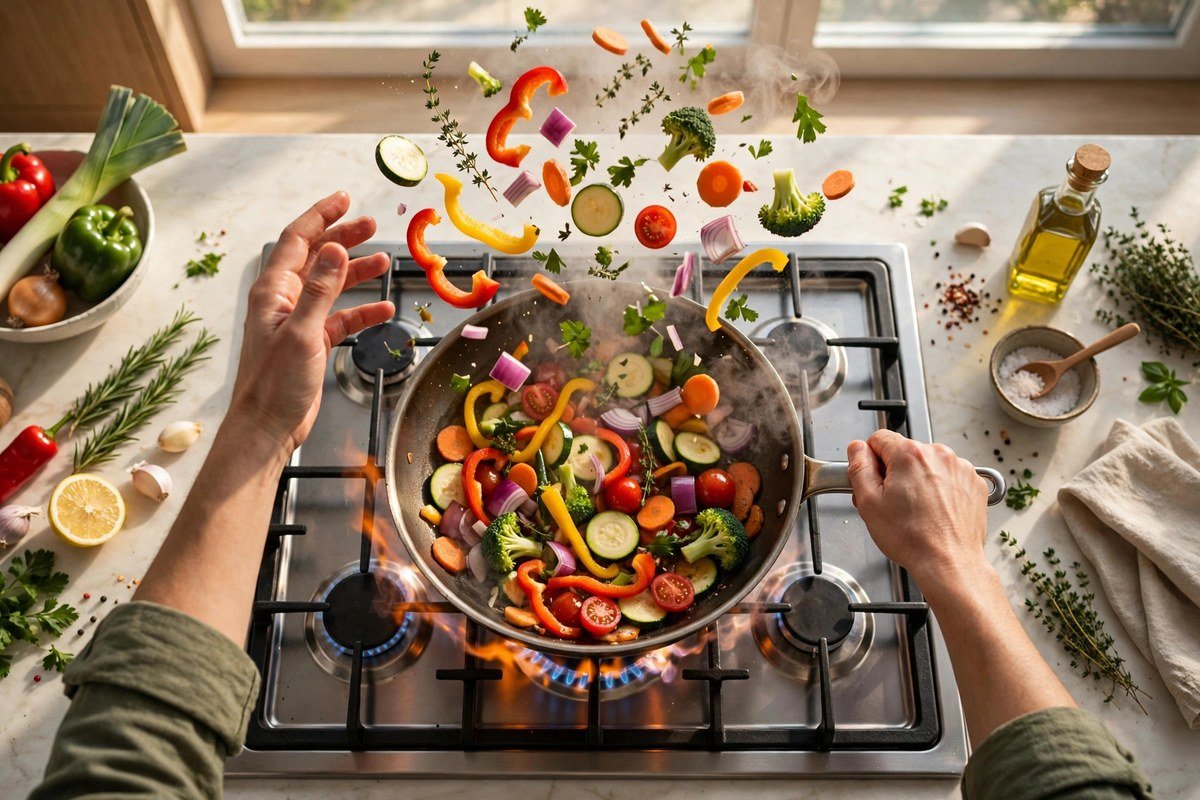
- “Thirty-second reel: hands tossing vegetables in a flaming wok, fire and steam, quick cuts, sizzling sound, vibrant and energetic.”
- “Sixty-second video: a street vendor grilling skewers over charcoal, smoke rising, spices sprinkled over the meat, warm evening light, lively and real.”
- “Thirty-second reel: a biryani pot being opened, steam rushing out, saffron rice revealed, slow motion on the steam, rich and aromatic.”
- “Sixty-second video: hands stretching dough for flatbread, slapping it onto a hot griddle, bubbles forming, golden spots appearing, warm and rustic.”
- “Thirty-second reel: a taco being filled with grilled meat, salsa, and lime, close-up on the colours, bright daylight, fresh and bold.”
Editing Tricks: Close-Ups, Sizzles, and Transitions
Three editing tricks make cooking videos feel professional. First, the texture close-up: a shot so close that the viewer can see the crispness of the crust, the gloss of the sauce, or the melt of the cheese. Ask the prompt for “extreme close-up” on the best moment, and hold it for two seconds. Second, the sound of the sizzle: keep the natural cooking sounds loud under the music, or drop the music entirely for the sizzling shot. The sound of food cooking is the most appetising sound in the world, and no music can replace it.
Third, the smooth transition between steps. A wipe, a quick pan, or a match cut from the raw ingredient to the finished dish keeps the video moving without jarring the viewer. Avoid flashy transitions, spins, and zooms, which distract from the food. The vlog editing prompts on this site follow the same rule: the edit should be invisible, and the subject should carry the video.
Captions, Recipes, and Posting
A cooking video without a recipe is a tease, not a guide. Put the full recipe in the caption or the first comment, with the ingredients listed first and the steps in order. Keep the caption short enough to read on a phone, and put the cooking time and the serving size at the top, so a viewer can decide in seconds whether to save it. A recipe that is easy to save is a recipe that gets shared.
Mistakes That Ruin a Cooking Video
The most common mistake is filming in bad light. A kitchen filmed under a single cold ceiling bulb makes every dish look grey, while the same kitchen with warm window light makes the same dish look golden. Cook near a window when you can, and add a warm lamp when you cannot. The second mistake is a dirty background. A sink full of dishes, a stained cloth, or a cluttered worktop behind the food tells the viewer the kitchen is messy, even when the dish is perfect.
Frequently Asked Questions
What should an AI video editing prompt for cooking videos include?
The best prompt names the dish, the key action, the camera angle, and the light, such as an overhead shot of hands tossing pasta with steam rising in warm light. Write the prompt as a list of shots, not a paragraph of adjectives.
How long should a cooking video be?
A short reel works best at thirty seconds, while a full recipe suits sixty to ninety seconds. Show the finished dish in the first three seconds, then show the steps that made it.
Should cooking videos show the cook’s face?
Most cooking videos work better with hands only, since the food stays the star. A face divides the viewer’s attention, while hands, food, and steam keep it exactly where it belongs.
What light is best for cooking videos?
Warm kitchen light or morning sun through a window suits food best, since it makes colours look rich and golden. Avoid a single cold ceiling bulb, which makes every dish look grey.
How do I write a caption for a cooking video?
Put the cooking time and serving size at the top, list the ingredients, then the steps in order. A caption that is easy to save on a phone is a caption that gets shared.
Final Thoughts
A good cooking video is a short story with a delicious ending. It starts with a finished dish that makes the viewer hungry, then shows the hands, the heat, and the small moments that made it, and finishes with a plate that looks worth eating. The prompts in this guide are built around that story: the close-up, the sizzle, the steam, and the light that makes food look real. Try them with a dish you already cook well, keep the kitchen clean and the light warm, and let the food do the talking. The videos people save are never the most complicated ones. They are the ones where the food looked so good that the viewer wanted to cook it tonight.



2 Comments