Best Lightroom Presets for Rain Photos: Moody Light, Wet Streets & Soft Grey Tones
Quick answer: The best Lightroom presets for rain photos embrace the grey: soft, diffused light, wet surfaces that reflect the city, and gentle contrast that keeps the mood without turning the frame dull. A good rain preset lifts the shadows enough to reveal detail in dark streets, keeps raindrops and reflections crisp, and lets the cool tones speak for themselves. Choose one moody style, protect the highlights on wet pavement, and let the weather set the tone.
Why Rain Changes Every Rule of Light
Rain rewrites the light in a photograph. Clouds act like a giant softbox, spreading the daylight evenly so there are no harsh shadows and no blown highlights, only a calm, even glow. That softness is a gift: skin looks smooth, colours stay true, and the whole scene feels gentle. It is also a trap, because an edit that adds contrast the way you would on a sunny day can destroy exactly what makes rain photographs special.
Wet surfaces add a second layer of complexity. Pavement turns into a mirror, windows streak with running water, and every street lamp leaves a long, trembling reflection. Those reflections carry the beauty of a rainy photograph, yet they are fragile: push the brightness too far and they vanish into white, crush the shadows and they disappear into black. The presets that suit rain keep both ends of that range alive, so the reflections stay visible and the dark corners still hold detail.
What to Look for in a Rain Preset
Begin with how the preset handles grey. A rainy sky is not one flat colour: it holds layers of silver, slate and pale blue, and a good preset keeps those layers distinct. If the sky comes out as a single dull slab, the preset is flattening the tones too much. Look for a look that keeps the clouds soft and layered, with the lightest part of the sky still brighter than the rooftops below it.
Next, check the reflections. Wet streets, puddles and car roofs should keep their glow, and the preset should protect the bright spots where lamps and shop signs reflect. A preset that guards highlights will keep those reflections sparkling instead of letting them burn out. At the same time, the shadows under awnings and doorways should stay open enough to show the texture of wet stone and wood.
Colour is the third test. Rainy photographs often look best with restrained, cool colours: muted greens, soft blues and the warm amber of a street lamp against the grey. A preset that oversaturates will fight the mood, while one that drains all colour will leave the frame lifeless. The sweet spot is a gentle, cool grade that lets one warm accent — a lamp, a coat, a shop window — stand out against the grey.
- Layered grey skies: clouds that keep their depth instead of turning into one flat slab.
- Guarded reflections: wet pavement and puddles that keep their glow and sparkle.
- Open shadows: doorways and awnings that still show texture in the dark.
- Cool, restrained colour: muted tones with a single warm accent, like a street lamp.
- Soft atmosphere: mist and falling rain kept visible without turning grainy.
Preset Styles That Suit Wet Weather
Moody cool presets are the natural home of rain photography. They deepen blues and greys, darken the frame edges a touch, and push the wet street forward as the subject. Dusk city lanes, drizzly forest paths and quiet village roads all suit this treatment, because it delivers a film-like depth no airy grade can reach — as long as the darker corners retain visible detail, so atmosphere never slides into murk.
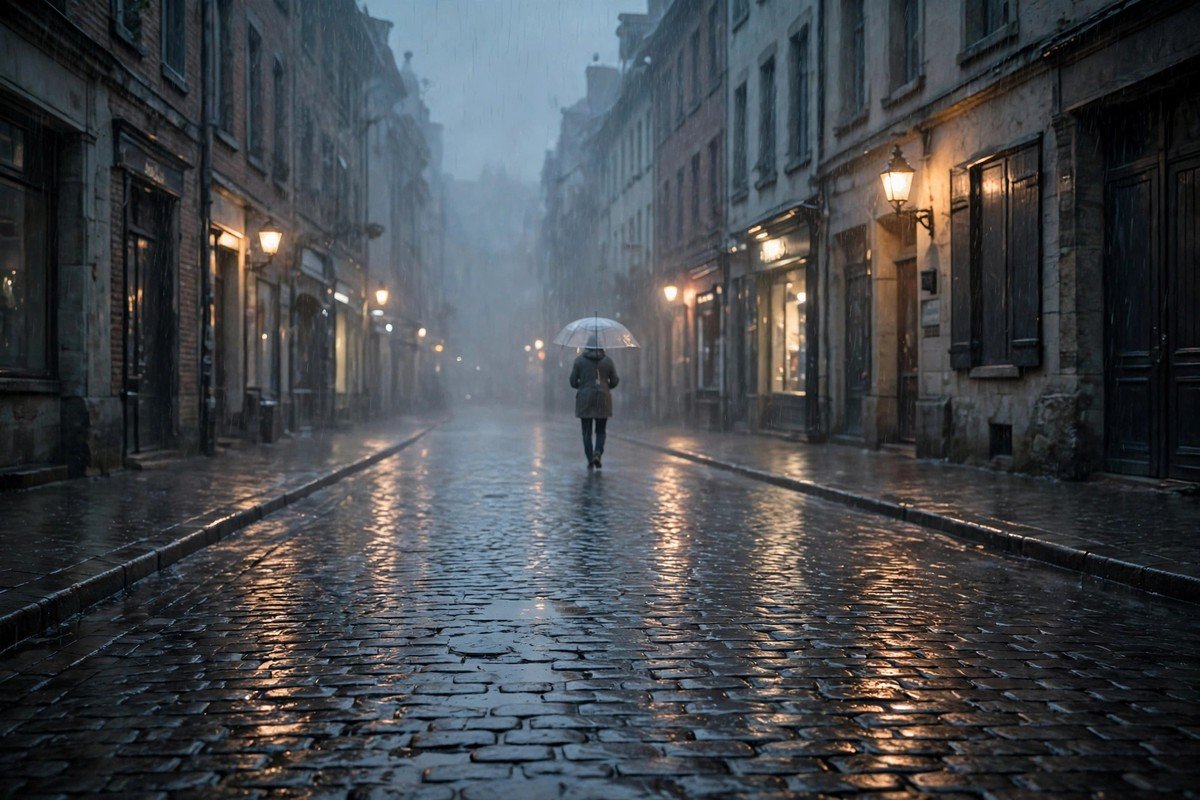
Soft film presets give rainy photographs a nostalgic, gentle quality. They mute the contrast, add a faint grain, and wrap the frame in a pale, silvery haze that suits old streets, country roads and window portraits. A figure with an umbrella on a cobbled lane suits this style beautifully, though the softness must stay subtle: too much fade and the rain disappears entirely, leaving a washed-out frame.
Clean and bright presets take a different approach, lifting the whole picture and keeping the colours fresh. They work well for daytime rain, when the light is already soft and the photograph should feel hopeful rather than heavy. A bright style suits garden rain, children splashing in puddles, and fresh green leaves after a shower, though the highlights on wet surfaces need watching so the reflections do not lose their shape.
Warm contrast presets offer a striking middle ground for rainy evenings. They keep the grey of the sky and the street while letting lamps, neon signs and car headlights glow amber against it. This style suits city rain at night best of all, when the contrast between cool pavement and warm light is at its strongest. Used with care, it turns an ordinary wet street into a scene from a film.
Editing Wet Streets and Reflections
Wet streets are the heart of most rain photographs, and they deserve careful handling. Begin by balancing the light so the brightest reflection still shows colour and the darkest doorway still shows texture. Then choose a cool, moody style that supports the grey you actually saw, rather than inventing a storm that never happened. Small adjustments matter more here than big ones: a gentle lift in the shadows will reveal the cobbles, while a large one will wash the mood away.
Pay attention to the horizon of reflections. A puddle mirroring a shop sign can anchor a whole photograph, but a frame full of competing reflections turns chaotic. Pick one reflection to feature — the longest, the brightest, or the one with the clearest colour — and let the others stay quiet. Keep the pavement level in the frame, since a tilted street can make a calm rainy scene feel restless.
People add life to rainy streets, and their umbrellas add colour. A single red or yellow umbrella against grey pavement can transform a photograph, so protect that accent when you edit: keep its colour true and let it stand out while the rest of the frame stays muted. For more ideas on soft light in outdoor settings, the nature photography presets guide covers gentle daylight in forests and fields.
Keeping a Rainy Series Consistent
What unifies a rainy set is one shared grey running through it. Morning drizzle, an afternoon downpour and lamplit streets after dark ought to read as chapters of a single wet day, not three unrelated forecasts. Decide on one cool treatment before you begin, apply it to every frame, and vary nothing except exposure as the rainfall grows heavier or lighter.
Once shooting is done, lay your strongest images side by side — drops beading on glass, a deserted noon street, an umbrella crossing the square, lamps doubling in puddles at dusk. Any single image that glows hotter, shines brighter or shouts louder in colour than the rest needs pulling back, nudged in small steps until it sits comfortably with its companions. Viewers remember a unified set far longer than a lone standout surrounded by pictures that do not belong with it.
Sequence matters in a rainy series too. Start wide, with the street and the sky, then move closer: a puddle, a window, a face under an umbrella. When the grey stays steady across that sequence, the viewer feels the rain building around them, and each new frame deepens the atmosphere rather than breaking it. The monsoon photography presets guide offers more ideas for keeping heavy-rain series steady.
Rain Editing Mistakes to Avoid
The costliest error is turning a rainy photograph gloomy. It is easy to darken the frame until the mood feels heavy, yet the viewer will feel the weight rather than the beauty. Keep the shadows open enough that the street still shows its texture, and let the lightest part of the sky stay bright, so the picture feels like rain rather than night.
A second trap is erasing the rain itself. Strong noise reduction or heavy smoothing can wipe away falling drops and rising mist, leaving a photograph that could have been taken on any grey day. Protect the fine detail: the drops, the streaks on glass, the haze over warm asphalt. Last, watch the colour balance, since a grade that pushes too far toward blue can make skin look cold and lifeless, while one that pushes toward green can make the whole street feel sickly.
- Gloomy shadows: dark tones pushed so far that wet streets lose their texture.
- Erased rain: drops and mist smoothed away until the weather disappears.
- Burnt reflections: bright spots on wet pavement turned to blank white.
- Cold skin: a blue grade that leaves faces looking chilly and lifeless.
- Clashing frames: a series that jumps between moody, bright and warm styles.
Frequently Asked Questions
What preset style suits rain photos best?
A moody, cool style that keeps the grey layered and the reflections glowing suits most rain scenes best. It holds the atmosphere without turning the frame dull or gloomy.
How do I keep rain visible in my photos?
Choose a preset that protects fine detail, then avoid heavy smoothing or noise reduction that wipes drops away. A slight lift in clarity around windows and puddles can help the rain read clearly.
Can I use one preset for the whole rainy day?
Yes. Use one cool base for the whole wet day and retune it as conditions shift — lift the darker areas slightly for morning drizzle, and shield the amber lamp glow once evening rain arrives.
Do rain presets work for snow photos too?
They often do, since both settings share soft light and pale skies, though snow frames usually need brighter tones and more care with white balance. Test the preset on a snow frame before committing to it.
Should rain photos be dark or bright?
Most rainy scenes suit a soft, even light with shadows left breathing — picture a street just after a shower, nothing forced. Grades that squash the darks into black, or bleach everything pale, both rob the weather of its character, so avoid those two extremes.
How do I edit reflections without blowing them out?
Start with a grade that reins in the brightest areas, then lower highlights until every reflection regains its hue and outline. Metering off the damp pavement instead of the sky normally preserves far more usable detail.
Final Thoughts
A strong rain image lets someone almost hear the drops and feel cool air on their face. Keep one moody grade across the set, protect the shine on wet pavement and the layers in the clouds, and let a light hand do the work from the first drizzle through to the last lamplit puddle. The result should feel like the day itself: soft light, slick streets, and a world rinsed quiet.